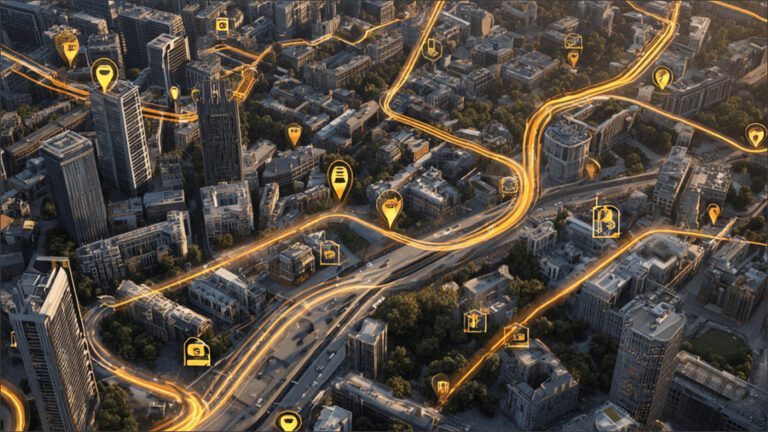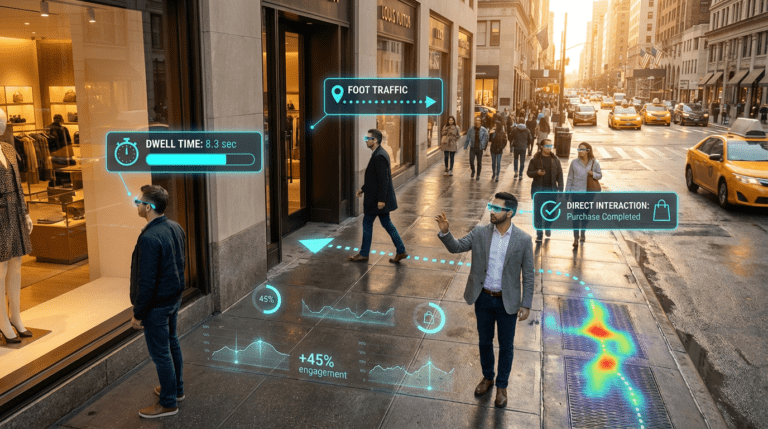

As more of our lives move online, it is easy to assume that physical location is becoming less important. We work remotely, shop online, and communicate instantly across the globe. On the surface, geography can feel secondary.
But in reality, location has not disappeared. It has become more subtle, and in many cases, more valuable.
The idea that location no longer matters
Digital platforms have trained us to think in terms of audiences rather than places. Advertising targets interests, behaviours, and demographics. Content is distributed globally in seconds. Services are accessible from almost anywhere.
This has created the impression that physical location is no longer central to how value is created.
However, this view only tells part of the story.
People still live in physical places
No matter how digital the world becomes, people still exist in physical environments. They move through cities, commute to work, attend events, and gather in shared spaces.
These behaviours are shaped by location.
• Where people go influences what they notice
• Physical context affects decision making
• Proximity still matters for businesses and services
Location is not replaced by digital systems. It is interpreted through them.
Why businesses still care about place
For many businesses, location has always been fundamental. Restaurants, retail stores, venues, and service providers depend on being visible in the right places.
Even digital first brands care about geography when it comes to:
• Local relevance
• Market expansion
• Event based engagement
• Physical customer experiences
Location provides context that digital targeting alone cannot fully replicate.
Digital systems detached from place have limits
When digital experiences are completely detached from physical context, relevance often suffers. Ads appear at the wrong time. Information lacks situational meaning. Users become passive and disengaged.
This is one reason people experience fatigue with purely feed based digital environments.
Reintroducing location adds grounding. It connects information to where someone actually is, not just who a platform thinks they might be.
Location as a foundation, not a filter
The most effective digital systems do not ignore location. They use it as a foundation.
When digital presence is anchored to real places:
• Information becomes contextual rather than generic
• Visibility aligns with real world behaviour
• Digital space reflects physical reality
This does not reduce scale. It improves relevance.